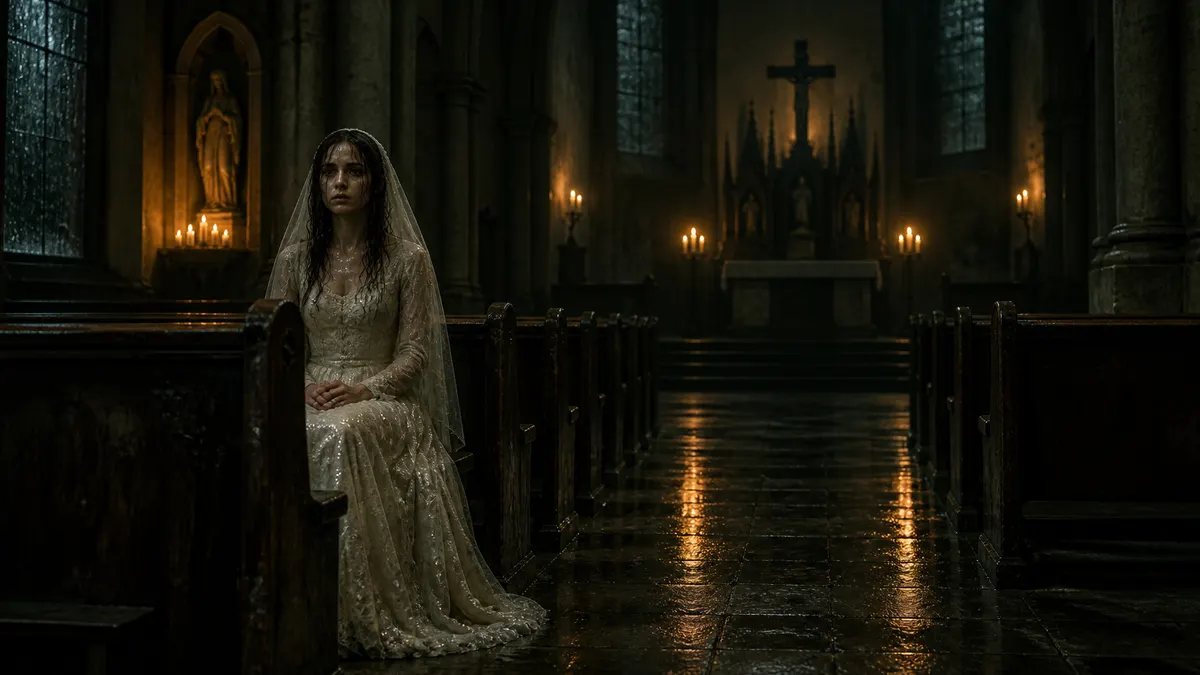
The first time Danny saw her, he thought someone had broken in. It was 2:14 a.m., and St. Mark's had been locked and dark for eleven months. She sat in the third pew, straight-backed, hands folded, wearing a coat that looked wet. A plain ring caught the light on her left hand. Danny called out — she didn't turn. He called again, and that's when the lights went out one by one, starting at the altar and walking toward him.
Before You Read This Scary Ghost Story
Most scary ghost stories ask what the ghost wants. This one asks who has been hiding from her. The Woman in the Third Pew is a complete short ghost story, about ten minutes long, set in a church that has been locked for eleven months. There are no jump scares written for their own sake. The fear builds from small, wrong details: a wet coat, a dripping sound and a pew that will not dry.
Like the best scary ghost stories, it works on two levels. On the surface it is a haunting, with a woman who appears at 2:14 a.m. and lights that go out one by one. Underneath it is a story about guilt and a crime that was ruled an accident. Content note: it mentions a road death and a hidden body, without gore.
The woman after closing
He didn’t run. He had been the janitor at St. Mark’s for thirty-two years, and he had a private rule about fear: it was for people who hadn’t spent three decades alone in a building with God. He stood still and listened. The lights died in rows — chancel, first pew, second — the way a hand drags down a piano. When the last one went, the dark was total and wet, the way air gets before a storm.
Then a sound. Not footsteps. Drip. Drip. Drip. Slow, regular, patient — water falling on wood, somewhere between him and the door. Danny counted. He reached forty-seven before the dripping stopped. He found the breaker box by touch and flipped everything. The lights came back in a scream of fluorescent buzz, and the third pew was empty.
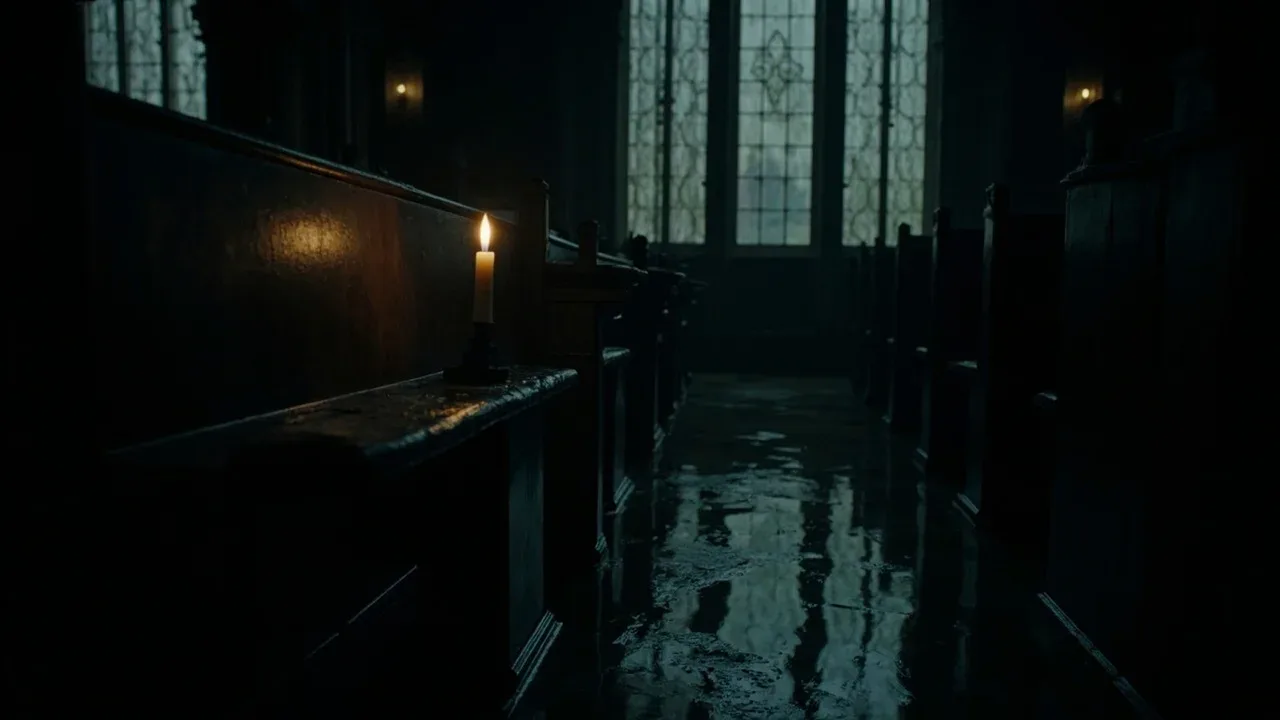
But not clean. A dark patch of water sat on the seat, roughly the shape of a woman who had been sitting with her hands folded. He touched it. It was cold, and the wood beneath had already begun to swell, as if the water had been there for hours. He brought a bucket and a clean cloth. By the time he returned, a drop had formed beneath the pew. It fell without making a splash.
The roof didn’t leak. He checked that same night, attic to sacristy, and the only wet thing in St. Mark’s was the third pew. In the attic, he pressed his palm against every seam he had repaired. Dry timber. Dry plaster. Outside, the September sky over the town was cloudless. It was 2005, and he had been finding reasonable explanations for unreasonable things since the winter of 1965.
His final paycheck was supposed to arrive that week. The parish had closed the building after Father Callahan died, leaving Danny to check the pipes and keep the place secure until the sale went through. Nobody required him to come at night. He preferred it. In daylight he noticed how many people had stopped needing him; after midnight, the church could still be waiting for morning.
The second night
The second night, he stayed to prove himself wrong. He sat in the back row with a thermos of coffee and the lights on full. At 2:14 a.m. exactly, the door to the narthex swung open on its own — not a slam, a slow push, the way a tired person opens a door. A draft came through, carrying the smell of rain and cold river water.
Danny got up. He was sixty-one years old, and he had stopped being afraid of the dark a long time ago. He was afraid of something else, and he had been afraid of it for so long that he had built a whole life around not looking at it. But he walked to the third pew anyway, because that was the kind of man he had made himself into: one who shows up.
The pew was dry. He sat down in it for the first time in his life. He had polished it, repaired its loose end panel, replaced a broken kneeler beneath it. He had never allowed himself to sit. Now the wood was warm — not from the radiator, warmer, like a seat someone had just left. That was when he heard her voice, very close to his ear, and very calm. “You remember the river.”
For the next three days, Danny did not sleep or return to the church. He sat in his kitchen with the television speaking to an empty room and watched a glass of water on the table. Once he thought the surface tilted toward him. His doctor had warned him about his heart and the way exhaustion could turn a harmless flutter into something serious. Danny put the pills beside the glass. He could not make himself drink.
The record
On the morning after those three sleepless nights, he went through the church office like a man looking for a weapon. St. Mark’s had kept every register since 1902: baptisms, marriages, funerals. He carried the marriage books to the sacristy table and started with 1965. The voice had said river, and he knew exactly which river: the one behind the old high school, where the current ran fast and the bank dropped off without warning.
He found it in the February book. A marriage, penciled in the margin and crossed out — not performed. Callahan, Michael R. — intended. Bride: O’Connell, Margaret. Died before the ceremony. Danny knew that name the way you know a scar. Margaret O’Connell. The girl who went missing in winter, found in the river in spring, ruled an accident. He had been twenty-one.
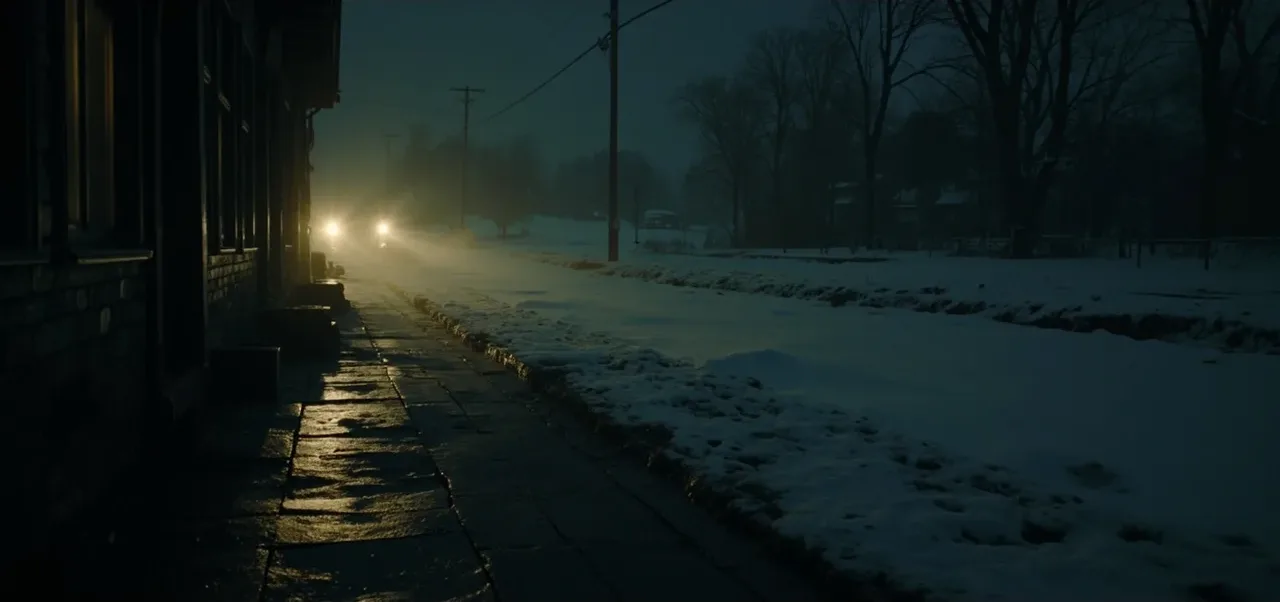
He had been driving his father’s Ford delivery van on an icy road. She had appeared in his headlights like a white page turning. He had felt the thump, stopped, and walked back. She was lying in the ditch with her eyes open, alive, reaching for him. The road was empty. Nobody had seen. For forty years, the memory ended there whenever Danny told it to himself.
The rest returned over the open register. He had lifted her. He had carried her beyond the guardrail. He had pushed her into the river, then driven away and told himself she had been dead already. He told himself for a year, then for seven more. In 1973 he took the only job he could bear, indoors at night, where he wouldn’t have to drive in the dark. Scrubbing floors on his knees had looked sufficiently like penance.
The register said her body was found in March. The accident ruling had never been questioned. Michael Callahan had been her fiancé. He had attended her burial, never married, and later become a priest. By the time Danny came to St. Mark’s, Father Callahan was already there. Every morning before Mass he sat in the third pew, saying nothing. Danny had always assumed the old man was praying. Now he wondered if Callahan had been keeping watch.
The return
That evening Danny returned with a candle and stayed past midnight. This would be his third encounter, not his third consecutive night. Callahan’s last words, mumbled in the nursing home while Danny held his hand, had been: “Light the candle on the third pew. She’s cold. She’s been waiting.” Danny had called it fever-talk. Now he set the candle in the iron holder at the end of the pew and lit it. At 2:14 the door opened, and this time he didn’t look away.
She stood in the aisle. Not in a coat. He had been wrong about that. It was a wedding dress, soaked through, heavy with river water running from the hem in a steady stream. Her hair hung in dark ropes. Her face was pale and young and exactly as he remembered it from the moment he had never let himself remember: the moment she looked up from the ditch and said his name.
“Danny.” She had read it on the side of his father’s van, DANNY’S painted above the delivery number. His father had named the business after his only son. He had heard her say it in the road. That was why he had run. She had seen his face and known his name, and even through his terror he had understood that leaving her alive meant leaving a witness. “Margaret.” His voice came out dry. “I’m sorry. I’ve been sorry—”
“I know,” she said. Her voice was not angry. That was the worst part. It was tired, patient, almost kind. “Michael knew too. He asked me not to come for you while he was alive. He thought you would find your own way back.” Danny stared. “He knew what I did, and he let me work here?” She looked at the empty place in the pew. “He gave you time. What you did with it was yours.”
She took a step. The river came with her, a smell of cold water and wet stone. The candle guttered. Danny looked down. Water was creeping across the tiles from the hem of her dress, spreading in thin dark fingers. “You’re not here to forgive me,” he said. She tilted her head. “You never came to the river, Danny. So the river has come to you.” Behind her, the door shut with a soft, final click.
The hand in the water
She held out her hand. Danny thought, absurdly, that he loved her. He had never known her well enough to earn the word. Yet he had spent so long imagining her that guilt and longing had grown into the same shape. He understood how easily a man could make a romance out of his own refusal to confess. Whatever waited in the aisle, it did not owe him tenderness.
He took her hand. The water was cold, but her fingers felt warm. “I’m sorry I ran,” he said. “I’m not running anymore.” The candle steadied. Water reached his ankles, his knees, his waist. He did not let go. For a moment he believed she had come to save him from the man who had left her by the road. For a moment he wondered whether that was simply the last lie he would tell himself.
“Come home with me,” she whispered. The water passed over his head. There was no struggle, no sound of furniture overturning. Only the impossible sensation of daylight somewhere far above him. Then he was sitting on the third pew again, and the candle had become a small bright point on the surface of something too deep to measure.
What they found
Later that morning Danny missed his final appointment with the parish. People searched his apartment, the hospital, the road to his sister’s house. On the third morning after his final visit, a priest sent to inventory St. Mark’s found him in the third pew, hands folded on his knees. His clothes were dry. He looked as if he had fallen asleep. The coroner recorded heart failure and estimated that he had died roughly three days before the discovery. Danny’s stopped wristwatch showed 2:14.
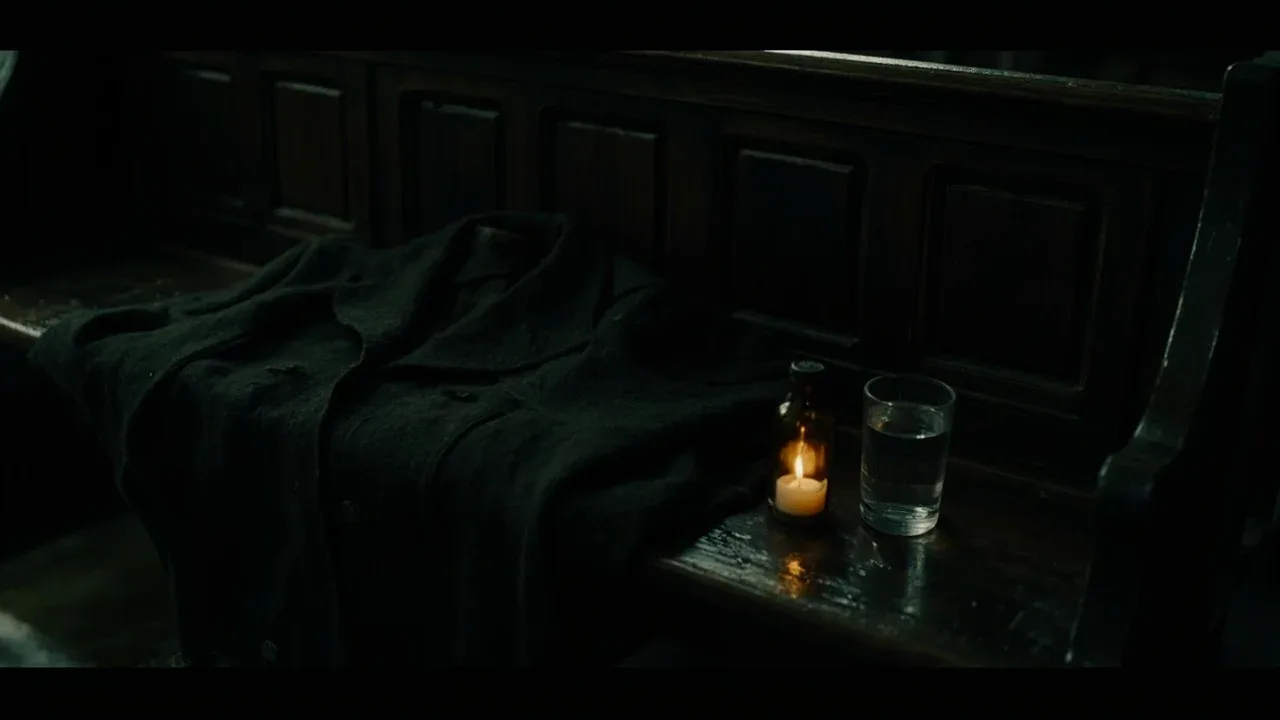
The floor was dry too. Beside him stood a burned-down candle and an unposted letter. “Margaret — I always knew you were waiting. I just needed to stop running long enough to see it.” The priest photographed the page before touching it. An old man with a failing heart and three sleepless nights could have written that letter, sat down, and imagined the rest. It was the explanation everyone preferred.
But the photograph contained something the priest had not noticed in the church: beneath the signature was a small circular wet mark, as if a ring had rested there. When he unfolded the letter again, its final line had changed. The words were lighter now, written in a hand he could not identify. He went to the office for the old marriage register, taking the candle with him. Behind him, from the third pew, came one patient drop.
HORROR DETECTIVE GAME · NO SIGN-IN NEEDED
Who did it?
Three questions about this short ghost story. One accusation per browser.
The Woman in the Third Pew FAQ
What makes The Woman in the Third Pew one of your scary ghost stories?
It is a complete short ghost story about a locked church, a wet pew and a buried crime. A dead woman keeps returning at 2:14 a.m., and her unfinished business is accountability.
How long does The Woman in the Third Pew take to read?
About ten minutes, which makes it a short ghost story you can finish in one sitting.
Where can I read more scary ghost stories?
For more scary ghost stories, read our famous ghost stories from history and folklore, the Noctur horror story series, and two sentence scary stories for tiny hauntings.
Is this scary ghost story suitable for teens?
It has no gore. It deals with a death on an icy road, a body hidden in a river and a priest’s guilt, so it suits older teens and adults better than young children.
Can I read this short ghost story aloud?
Yes. This short ghost story is told in six parts, from The woman after closing to What they found, and each part ends on a natural pause. Read aloud, it takes roughly fifteen minutes; slow down at 2:14 a.m.
Is The Woman in the Third Pew based on a true story?
No. Like all the scary ghost stories in our Noctur collection, it is fiction: St. Mark’s, Danny, Margaret O’Connell and Father Callahan are invented. If you want real hauntings, read our true scary stories, which link every case to a source.
Published by LiveLore · Reader-supplied story · AI-assisted revision · human-reviewed
Join the story-update list below. Email dispatches have no confirmed schedule; you can remove your address using your private unsubscribe link.
← Back to the stories